Cross-country body protector
Choose your option


Number holder
Choose your option

Cross-country helmet
Choose your option


Nylon helmet cover
Choose your option
Frequently Asked Questions
Is wearing a helmet mandatory?
Is wearing a helmet mandatory?
Do helmet accessories affect safety?
Do helmet accessories affect safety?
Is a protective vest useful outside of cross-country?
Is a protective vest useful outside of cross-country?
Security
Safety: protecting the rider at every stage of their practice
Safety is a fundamental pillar of equestrianism, regardless of the discipline practiced or the rider's level. Horse riding involves inherent risks related to movement, height, and the environment. Appropriate safety equipment helps reduce risks, limit the consequences of a fall, and allows for more confident practice. This category includes essential equipment dedicated to rider protection, designed to accompany daily practice as well as competition, without compromising safety, comfort, or freedom of movement.
Why is safety essential in horse riding?
Unlike other sports, horse riding involves interacting with a living animal that has its own reactions. Even with an experienced horse, the unexpected can still happen. The role of safety equipment is to:
• protect the rider's vital areas,
• limit trauma in case of a fall,
• boost the rider's confidence,
• allow for more committed and serene practice.
It does not replace technique or experience, but it forms an indispensable basis for equestrian practice.
Riding helmets: indispensable protection
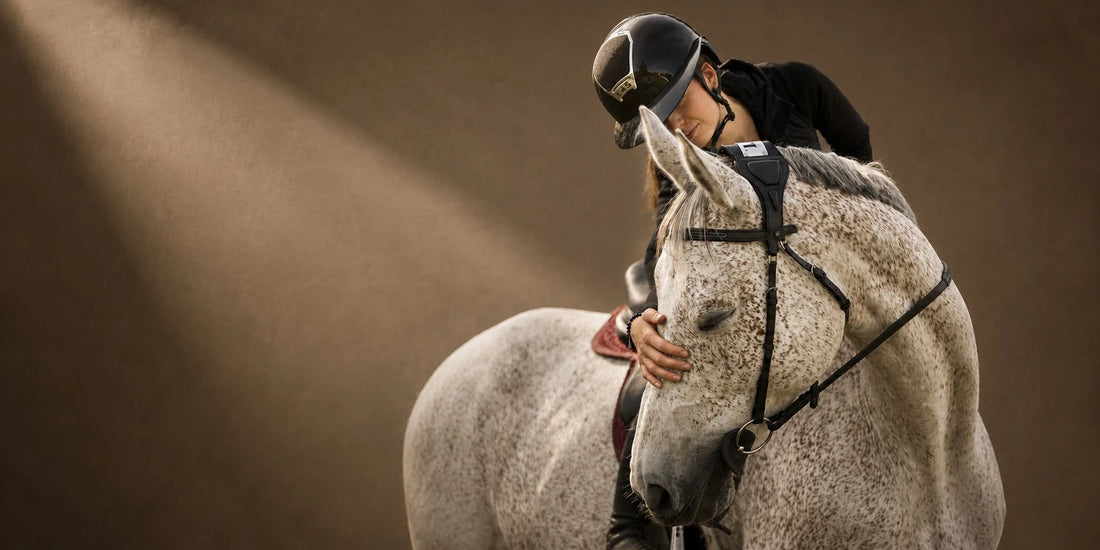
The helmet is the central element of rider safety. It protects the head in case of a fall and is now mandatory in most practices, both during training and in competition. Riding helmets are designed to:
• absorb shocks,
• offer stable support,
• ensure comfort and ventilation,
• adapt to the demands of different disciplines.
A suitable helmet is an essential piece of a rider's equipment.
Helmet accessories: customization without compromise
Helmet accessories, such as covers and stickers, allow for customizing the helmet's appearance without altering its safety features. They meet an aesthetic, practical need, for harmonization with the outfit or discipline. These accessories have no protective role in themselves, but they are part of a global approach to equipment, provided that the helmet's initial use and proper positioning are respected.
Protective vests: protecting the torso and vital areas
Protective vests are designed to protect the torso, spine, and vital organs in case of a fall or impact. They are particularly used — and sometimes mandatory — in certain disciplines, such as cross-country, but also have their place in other practice contexts. They help to:
• absorb part of the impact energy,
• limit trauma,
• secure more committed practices.
Choosing a suitable vest directly contributes to the rider's overall safety.
Safety, comfort, and freedom of movement
Effective safety equipment must:
• protect without restricting,
• adapt to the body shape,
• allow sufficient freedom of movement,
• be worn correctly and regularly.
Safety should never be seen as a constraint, but as an ally in equestrian practice.
A global approach to rider protection
Safety relies on a coherent set of elements:
• suitable riding helmet,
• compatible accessories,
• appropriate body protection.
By combining this equipment, the rider gives themselves the means to practice with more serenity, regardless of their level or discipline.